Costs and trade · · 10 min read
Mexico vs. China manufacturing: costs, tariffs, lead times, and quality
A practical comparison for U.S. buyers: factory prices, freight, duties for your specific product, inventory, supplier depth, and quality. Plus a checklist to decide which fits.
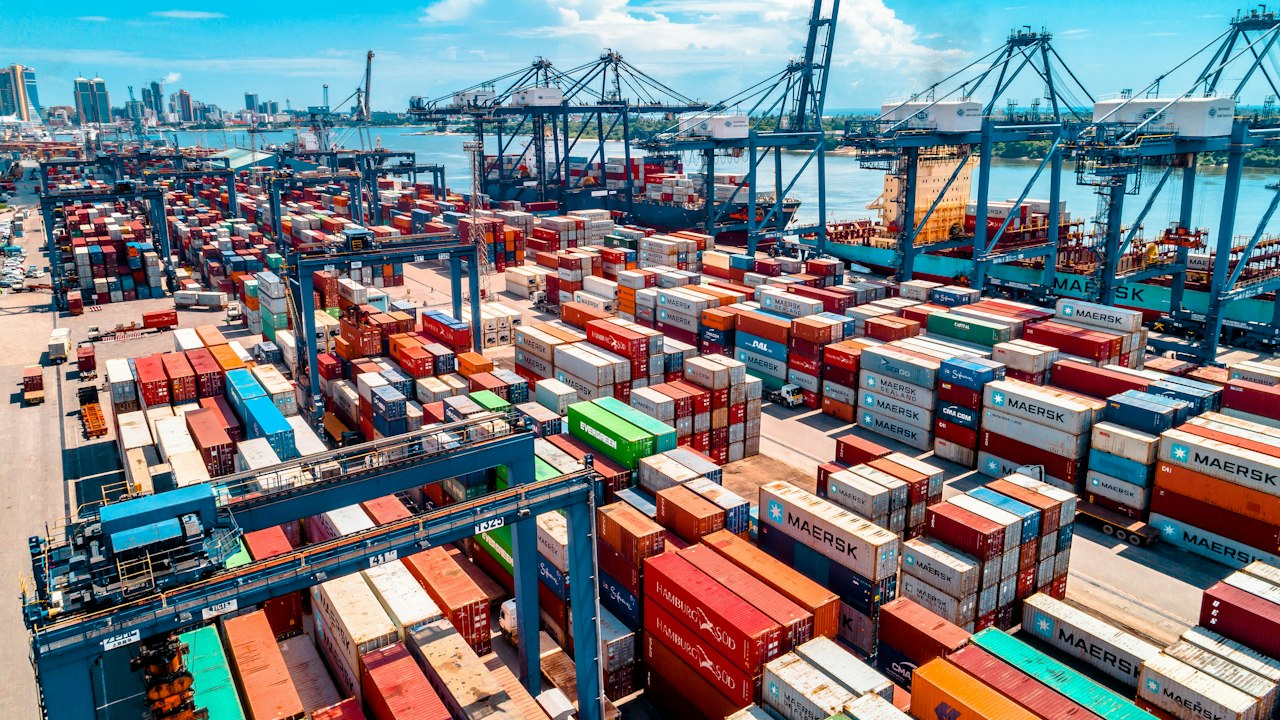
Photo: Ali Mkumbwa / Unsplash
"Is Mexico cheaper than China?" doesn't have one answer. For some products, China's factory price is far lower and stays lower after freight and duties. For others, Mexico wins once you count shipping time, inventory, and tariffs. The only way to know is to compare total cost for your specific product.
This guide covers what to compare and how.
Factory price
China often has the lower factory price for labor-intensive products, high-volume consumer goods, and electronics with deep local component supply chains. Decades of scale and dense supplier networks make that hard to match.
Mexico is often competitive, or cheaper, for:
- Heavy or bulky products, where freight is a large share of cost
- Automated processes, like stamping, molding, and machining, where labor is a smaller share of cost
- Products tied to North American supply chains, such as automotive, aerospace, appliances, and medical devices
- Lower volumes and frequent changes, where being close to the customer matters more than unit price
Get real quotes for your part from both before deciding. Rules of thumb are often wrong for a specific product.
Freight and lead time
From most of Mexico, goods reach U.S. customers by truck or rail in days. From China, ocean freight takes weeks at sea, plus time at origin and destination ports, before trucking to the final destination. Air freight is faster but costly for most products.
Shorter transit has costs and benefits beyond the freight bill:
- Less money tied up in transit. Goods on a ship for weeks are paid for and unsellable.
- Smaller safety stocks. You can reorder more often and react to demand changes faster.
- Faster problem solving. A quality problem with a truck in transit is days away from a fix, not a container cycle.
Tariffs: check your specific product
Tariffs are where generalizations do the most damage. Duties depend on the product's tariff classification (its HTS code), where it's legally considered to originate, and which trade measures apply at the time you import.
A few principles hold:
- Goods made in China may face additional U.S. duties, such as Section 301 tariffs, on top of standard rates, depending on the product.
- Goods made in Mexico can qualify for preferential, often duty-free, treatment under the USMCA, but only if they meet the agreement's rules of origin for that product. Assembling imported components in Mexico doesn't automatically qualify.
- Rates and measures change. U.S. tariff policy toward both countries has changed repeatedly in recent years. Check the current rates for your product before deciding.
Here's how the same product can come out under different assumptions. The rates below are examples only, not current rates for any real product:
| Scenario | Example duty |
|---|---|
| Made in China, standard rate plus an additional duty | 3% + 25% = 28% |
| Made in Mexico, meets USMCA rules of origin | 0% |
| Made in Mexico, does not meet USMCA rules of origin | 3%, plus any other measures in effect |
Ask a licensed customs broker to confirm the classification, current rates, and whether your Mexican-made product would qualify under the USMCA, using your actual bill of materials.
Inventory carrying cost
Long lead times mean more inventory: in transit, in safety stock, and in buffer for demand you didn't forecast. That inventory has a carrying cost, typically financing, storage, insurance, and the risk of obsolescence.
A rough way to see the effect: if your annual spend on a part is $500,000 and a shorter supply chain lets you hold six fewer weeks of inventory, that's roughly $58,000 less stock on hand. At a 20% annual carrying cost, about $11,500 a year. These numbers are illustrative; plug in your own.
Supplier depth
China's advantage is depth: for many consumer and electronic products, every component, material, and sub-process is available within a short drive. Mexico's supplier base is strongest in metalworking, plastics, automotive, aerospace, medical devices, appliances, electrical equipment, apparel, and furniture. For some products, Mexican manufacturers still import key components from Asia, which affects cost, lead time, and rules of origin.
- Apparel and textiles5,019
- CNC machining3,900
- Welding and fabrication3,598
- Sheet metal fabrication3,460
- Injection molding3,197
- Electronics manufacturing2,530
- Automotive parts2,457
- Metal stamping1,957
- Furniture1,865
- Plastic extrusion1,802
- Packaging1,798
- Metal finishing1,566
Quality
Quality depends on the supplier, not the country. Both have world-class plants and shops you shouldn't use. What changes is how easy it is to manage: Mexico's time zones overlap with U.S. business hours, travel to a plant is a short flight or a drive, and problems can be solved in person within days.
A decision checklist
Mexico is likely a strong fit if several of these are true:
- Your product is heavy, bulky, or expensive to ship.
- Your process is automated, or labor is a modest share of cost.
- Your product could meet USMCA rules of origin.
- Demand is volatile, or you need short lead times and frequent changes.
- You want to visit suppliers easily and work in overlapping hours.
- Your industry already has a strong Mexican supplier base.
China may remain the better option if your product is labor-intensive, depends on Asian component supply, sells in very high volumes, and has stable demand that tolerates long lead times.
See who could make it in Mexico
The fastest way to test the comparison is to find Mexican manufacturers for the exact product you buy from China and ask them to quote.
Find Mexican manufacturers for the product you source from China
Free, no account. You'll see named manufacturers and why each one matched.
More from the blog