CNC machining · · 8 min read
China vs. Mexico for CNC outsourcing: where each one wins
A practical comparison for buyers of CNC-machined parts: unit price, freight and lead time, tooling and prototypes, quality systems, tariffs, and the kinds of parts that fit each country.
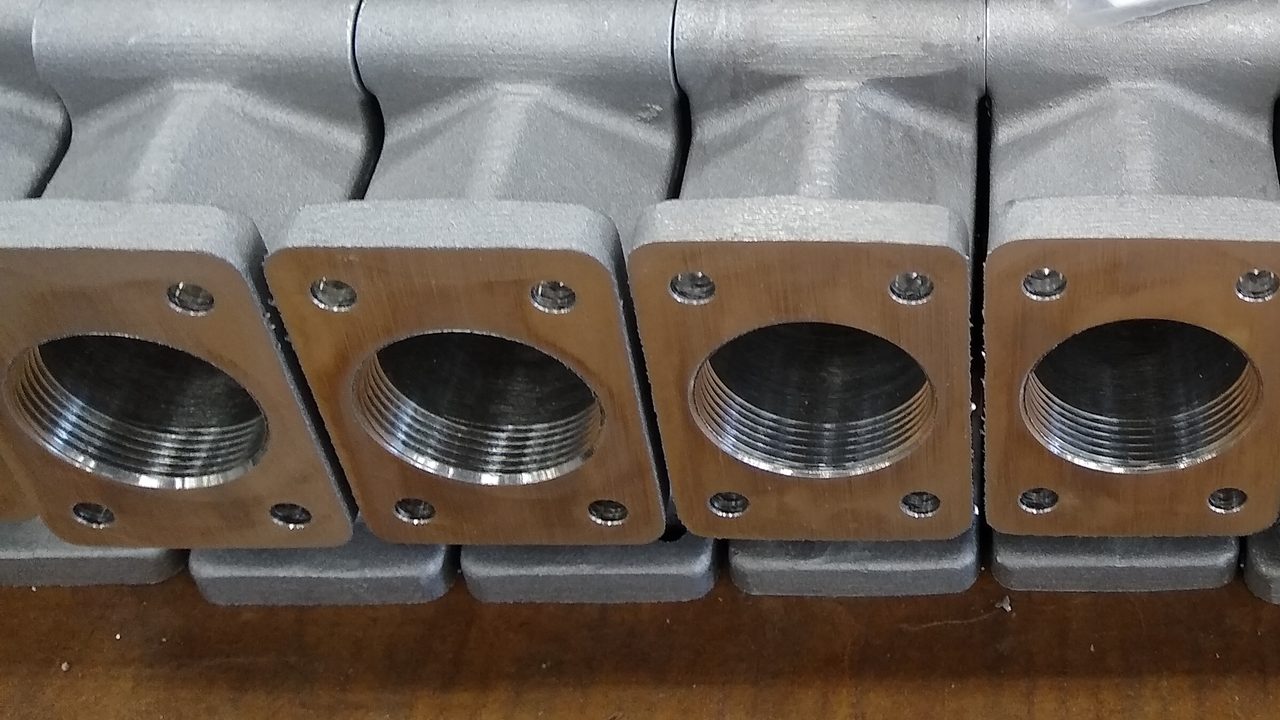
Photo: Whoisjohngalt (CC BY-SA 4.0) / Wikimedia Commons
CNC machining is one of the easier things to compare between China and Mexico, because the part is defined by a drawing. Either country can cut the same aluminum bracket to the same tolerance. The difference is in everything around the cut: price, shipping, communication, paperwork, and risk.
There is no single winner. This guide goes through the factors that matter for machined parts and says which kind of job tends to favor which country. It uses no price tables, because machining prices depend on material, tolerance, quantity, and finishing, and they move. Get quotes for your own part. For the broader comparison across all products, see Mexico vs. China manufacturing.
Unit price
China's quoted unit price for machined parts is often lower, especially at higher volumes and for simple geometries, because of the size of its supplier base and its material and tooling supply chains. That gap is the reason many buyers start there.
But unit price is the beginning of the calculation, not the end. A fair comparison uses landed cost: the part price plus freight, duties, packaging, inventory carried while the parts are on a ship, and the cost of problems. Mexico can come out closer or ahead when parts are heavy, when you need them in days, or when problems would be expensive. Ask for quotes in a format that lets you compare them: how to compare manufacturing quotes.
Freight and lead time
- Mexico to the U.S. moves by truck. Parts can arrive in days, and you can send a rep or engineer to the shop the same week.
- China to the U.S. moves by ocean freight, or by air if you pay for it. Transit is weeks, and the schedule has less slack.
For machined parts this matters more than for most products: machined parts are dense and often heavy, so air freight from Asia gets expensive quickly, and a revision or a rejected lot restarts the clock. If you iterate on designs, Mexico's shorter loop is a real advantage. See cross-border trucking.
Prototypes, tooling, and iteration
CNC doesn't need hard tooling the way casting or molding does, so prototype cost is mostly programming, fixtures, and material. That makes it an easy category to prototype in either country. The difference is the feedback loop. A fixture problem or a drawing ambiguity found in Mexico can be resolved with a call and a visit. The same question across an ocean and a time zone takes days. If your part is still changing, the cheaper unit price may not make up for the cycles lost.
Quality systems and inspection
Both countries have excellent shops and poor ones. What matters is the shop's system, not the country:
- ISO 9001 is the baseline general quality certification. In our directory, 201 of the 709 researched CNC shops state it on their websites.
- AS9100 (aerospace) and IATF 16949 (automotive) are stricter. Our directory shows 22 and 15 researched shops claiming them.
- Inspection: ask what equipment inspects your part, whether they will send a first-article report, and how they handle out-of-spec parts.
These counts are claims from the companies' own sites, not verified certificates. Whichever country you buy from, verify the manufacturer before you rely on a certification. See what CNC shops in Mexico can do.
Tariffs and trade
Duty rates on machined parts depend on the part's classification and where it is made, and the rules for imports from China have changed repeatedly in recent years. Check the current duty for your specific part and your own situation. This article doesn't quote rates because they change.
What stays true as a principle: goods made in Mexico may qualify for preferential treatment under the USMCA if they meet its rules of origin, and parts from China generally do not. Qualification depends on the product and its materials, so ask your customs broker rather than assuming. See how to import goods from Mexico.
Intellectual property and control
Your drawing is your property in either country, and you should protect it in both: use NDAs, share only what a shop needs, and consider whether a part can be split among suppliers. Practical differences matter more than legal ones: a shop within a day's drive is easier to audit and to visit than one on another continent. Do not treat either country as automatically safe.
Supplier depth
China has far more machine shops, and more of the specialized ones. Mexico has fewer, and some processes, very large parts, or exotic materials may have only a few qualified shops. In our directory, there are 3,838 CNC machining companies in Mexico, of which 709 have been researched and 1,412 state that they take outside orders. For most common work (steel, aluminum, stainless, brass) there are plenty of choices; for unusual work, search more narrowly.
Which fits which job
| Job | Often favors |
|---|---|
| High-volume, simple parts, price is everything | China, if you can plan around long lead times |
| Prototypes and parts you are still changing | Mexico, for the short feedback loop |
| Heavy or bulky parts where freight is a big share of the cost | Mexico |
| Low to mid volume with frequent releases | Mexico |
| Regulated products (aerospace, automotive, medical) with audits | Depends on the shop's certifications, and Mexico's proximity helps audits |
| Specialty materials or very large parts | Check both |
| Parts needing a certificate of origin under the USMCA | Mexico |
Many buyers use both: China for stable, high-volume parts and Mexico for fast-turn, changing, or heavy work.
How to decide
- Quote the same drawing in both, with the same tolerance, material, finish, and quantity.
- Convert to landed cost with freight, duties, and inventory.
- Price the risk: what does a late or rejected lot cost you?
- Check the shops, not just the country.
Live from our index · CNC machining, Mexico
All 3,838 →- Metalmod Mexico
Lerma, México · 251+ employees
✓ CNC machining
- Mecanomatic
Iztapalapa, Ciudad de México · 251+ employees
✓ CNC machining
- Taller de Hule y Maquinaria de Durango
Durango, Durango · 251+ employees
✓ CNC machining✓ ISO 9001
- Manufacturas Pueblo Viejo Industrial
Tonalá, Jalisco · 251+ employees
✓ CNC machining
Browse CNC machining companies in Mexico, or start with how to find manufacturers in Mexico.
Find CNC machining companies in Mexico
Free, no account. You'll see named manufacturers and why each one matched.
Get quotes from qualified CNC machining shops
We find and qualify Mexican CNC shops for your part, contact them in Spanish, and bring back quotes you can compare line by line.
More from the blog